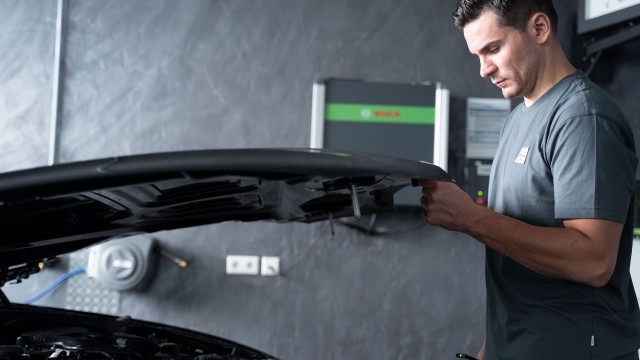
Transmission Oil Replacement

Transmission Oil Replacement

Transmission fluid change is easy to overlook — until shifting through your gears feels rough, performance drops or low transmission fluid symptoms start to show. A professional automatic transmission fluid change can help protecting components, improves smooth gear shifts and keeps your transmission working efficiently.

Transmission Oil Change at Bosch Car Service:

  • Fluid check & condition test: level and fluid condition
  • Fluid replacement or flush: change or flush as needed
  • System protection: support smooth shifting and cooling

Find Garage now

FAQs | Transmission Oil Replacement

Transmission fluid plays a key role in how smoothly your car drives. The FAQs below explain when a transmission fluid change makes sense, what to watch for, and how proper servicing helps protect your gearbox over time.

What are low transmission fluid symptoms?

Low transmission fluid symptoms are warning signs that your gearbox isn’t getting the lubrication and pressure it needs. You don’t need technical knowledge to notice them — they usually show up as changes in how the car drives.

Common low transmission fluid symptoms include:

  • Rough or delayed gear changes: gears don’t shift smoothly, especially when accelerating
  • Slipping gears: the engine revs increase but speed doesn’t rise as expected
  • Unusual noises: whining or humming from the gearbox, often linked to low fluid levels
  • Overheating behaviour: the transmission struggles under load or in traffic
  • Poor acceleration: power delivery feels weaker or inconsistent
  • Warning signs while driving: the car may feel hesitant or less responsive

Low fluid levels can be caused by leaks, ageing fluid or missed transmission fluid service intervals. Simply topping up isn’t always enough.

Find your local Bosch Car Service for individual advise:

How often to change transmission fluid?

There isn’t one fixed rule for every car. How often a transmission fluid change is needed depends on the vehicle, the type of transmission and how it’s driven.

General UK guidelines you’ll often see:

  • Mileage-based: many manufacturers recommend a transmission fluid change between 40,000 and 60,000 miles
  • Time-based: an automatic transmission fluid change is often advised every 4–6 years, even if mileage is low
  • Driving conditions: frequent stop-start traffic, towing or short journeys can mean the fluid needs changing sooner
  • Transmission type: DSG and automatic gearboxes usually have more specific service intervals than manual gearboxes

Some vehicles are marketed as “sealed for life”, but in real-world UK driving, fluid still degrades over time and can affect shifting, cooling and longevity.

If you’re unsure what applies to your car, a professional check is the safest option.

A nearby Bosch Car Service can review manufacturer guidance, check fluid condition and advise individually whether a transmission fluid service, automatic transmission fluid change or further action is recommended for your vehicle.

How long can I drive with low transmission fluid?

There’s no safe or reliable timeframe. Driving with low transmission fluid is not recommended at all — even short distances can increase the risk of damage.

Why you shouldn’t keep driving:

  • Lack of lubrication: low fluid reduces protection for internal components
  • Poor shifting: gears may slip, hesitate or change harshly
  • Overheating risk: fluid also cools the transmission — low levels can cause overheating
  • Rapid wear: continued driving can turn a simple transmission fluid change into a major repair

Even if the car still moves, damage can progress quickly and without obvious warning.

The safest option is to stop driving and get professional advice immediately. A nearby Bosch Car Service can check the fluid level and condition, identify leaks if present, and advise whether a transmission fluid service, automatic transmission fluid change or further work is needed — before serious damage occurs.

Does transmission fluid affect acceleration?

Yes. Transmission fluid directly affects acceleration. The fluid provides hydraulic pressure, lubrication and cooling inside the gearbox. When the level or condition isn’t right, power can’t be transferred efficiently.

How it can affect acceleration:

  • Delayed response: low or degraded fluid reduces hydraulic pressure, causing hesitation
  • Slipping under load: the engine revs rise but speed doesn’t increase smoothly
  • Rough gear changes: shifts feel slow or jerky, interrupting acceleration
  • Overheating: poor cooling leads to reduced performance, especially in traffic

Common causes include low transmission fluid symptoms, dirty fluid, leaks, or missed transmission fluid service intervals. In these cases, a transmission fluid change or automatic transmission fluid change can often restore normal response—if addressed early.

If acceleration feels off, a professional check is best. A nearby Bosch Car Service can assess fluid level and condition, identify leaks, and advise whether a transmission fluid replacement, service, or further diagnosis is needed—clearly explained before any work starts.

What are the symptoms of dirty transmission fluid?

Dirty or degraded transmission fluid can no longer lubricate, cool and control the gearbox properly. For drivers, this usually shows up as changes in how the car behaves — not as a single obvious fault.

Common symptoms of dirty transmission fluid include:

  • Rough or delayed gear changes: shifts feel slower, harsher or less precise
  • Slipping gears: engine revs rise but acceleration feels inconsistent
  • Jerking or hesitation: especially when pulling away or changing speed
  • Unusual noises: whining or humming from the gearbox
  • Overheating behaviour: performance drops in traffic or under load
  • Dark fluid colour: transmission fluid turns brown or smells burnt
  • Reduced smoothness: the car feels less refined during everyday driving

Dirty fluid is often caused by age, heat and normal wear particles building up over time, especially when transmission fluid service intervals are missed.

If you notice any of these signs, a professional check is the safest next step. A nearby Bosch Car Service can assess fluid condition, explain whether a transmission fluid change or further inspection is required, and advise you clearly before any work is carried out.

Can I change transmission fluid myself?

In theory it’s possible — but in practice, a transmission fluid change is usually not recommended as a DIY job. Modern gearboxes are complex, and doing it correctly requires more than just draining and refilling fluid.

Why it’s better handled by a professional:

  • Access & design: many vehicles don’t have a dipstick, and the gearbox oil change procedure depends on exact temperatures and levels
  • Correct fluid: using the wrong fluid can affect shifting and gearbox performance
  • Specialist tools: proper filling, level checks and resets often require diagnostic equipment
  • System checks: a professional transmission fluid service also looks for leaks, contamination and early wear
  • Accuracy matters: incorrect filling can lead to poor shifting or overheating, even if the fluid is new

Because of these factors, DIY changes often miss important steps — even when intentions are good.

The safer option is professional advice. A nearby Bosch Car Service can carry out an automatic transmission fluid change, ensure the correct procedure for your vehicle, and explain what’s needed before any work starts — clearly and transparently.